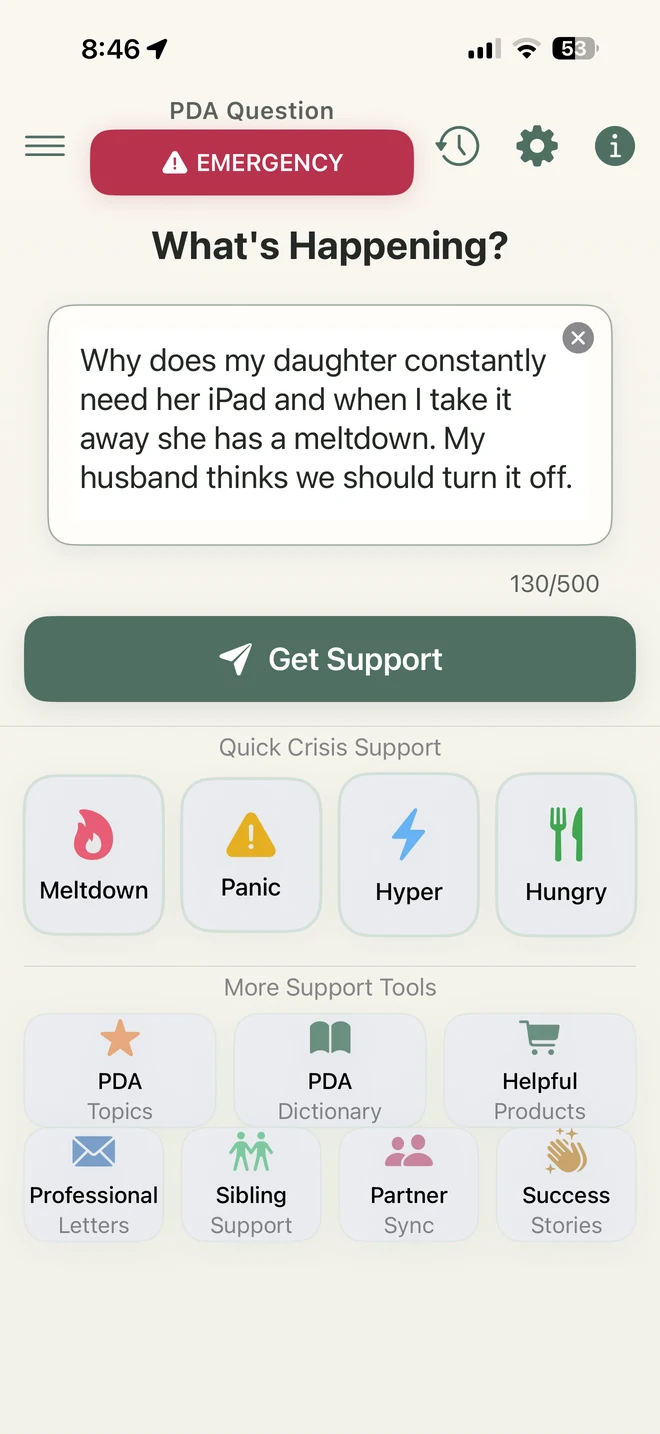
Describe the moment
Write what is happening in your own words. Avoid names and identifying details.
PDA Question helps you describe what is happening, consider what may be underneath it, and find lower-pressure words for what comes next.
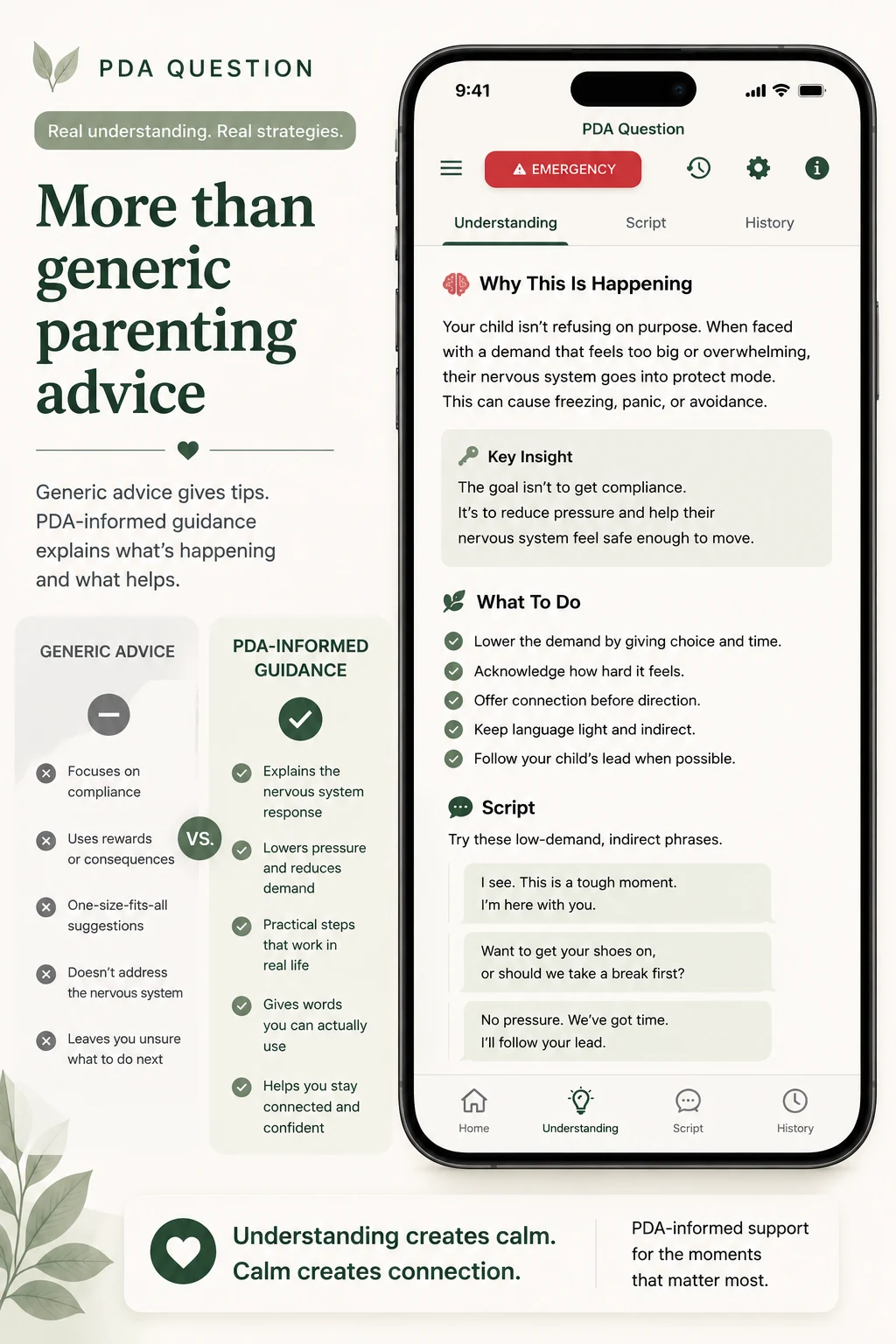
Write what is happening in your own words. Avoid names and identifying details.
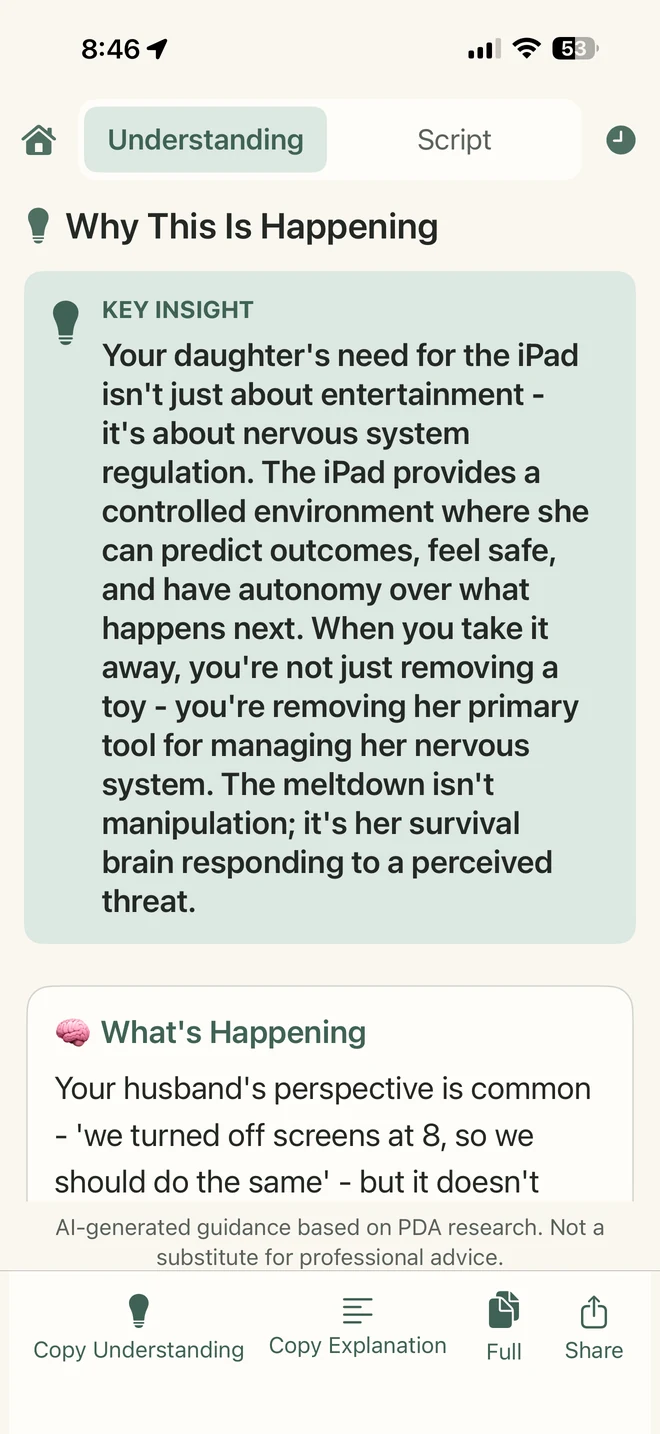
Consider possible pressure, autonomy, capacity, and felt-safety factors beneath the behavior.
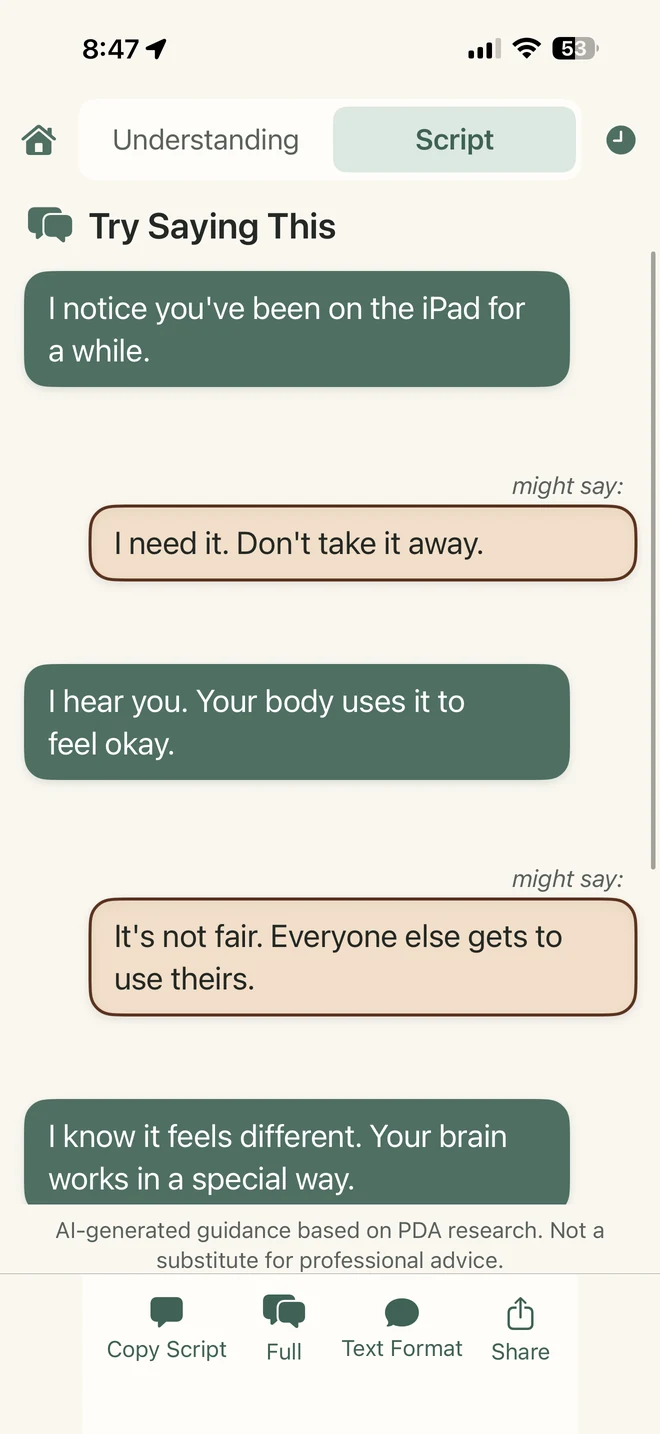
Use calm, natural wording aloud, in a message, or as supportive self-talk.
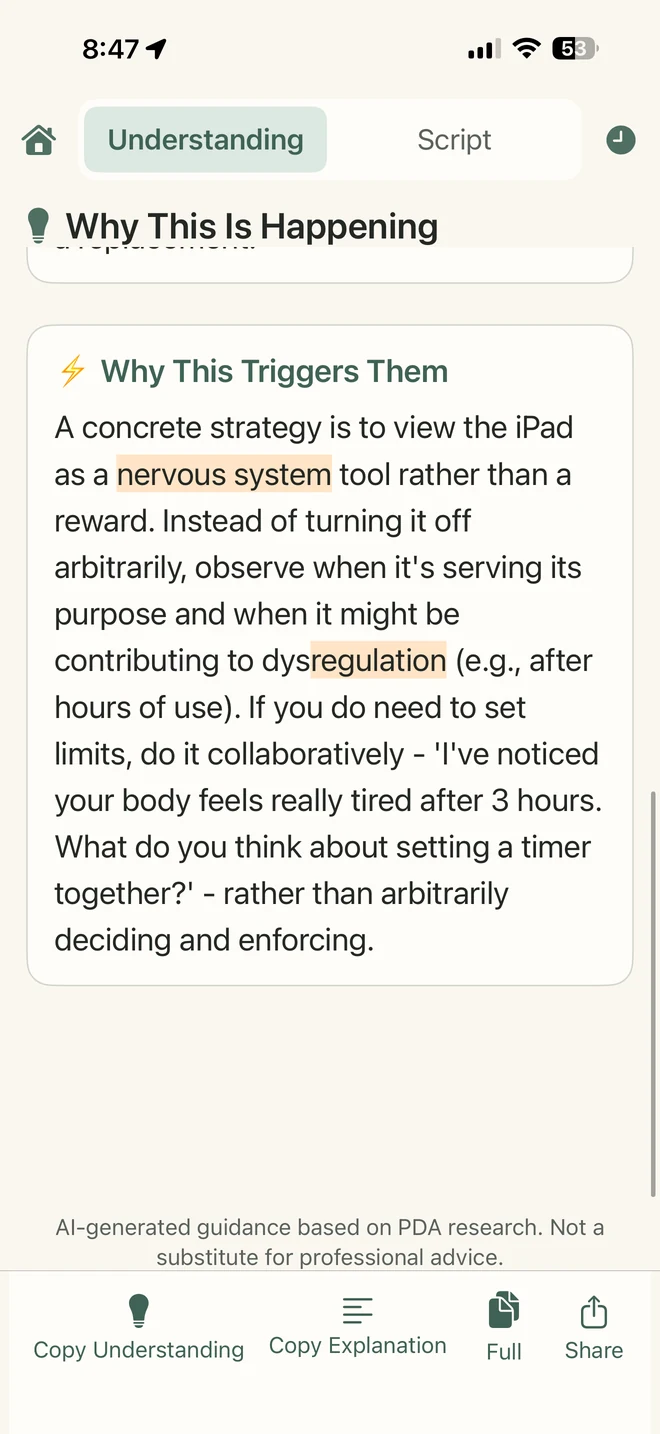
Understanding offers a tentative, PDA-informed explanation of what may be happening and why common compliance-first responses can add pressure.
It is educational guidance, not a clinical interpretation or assessment.
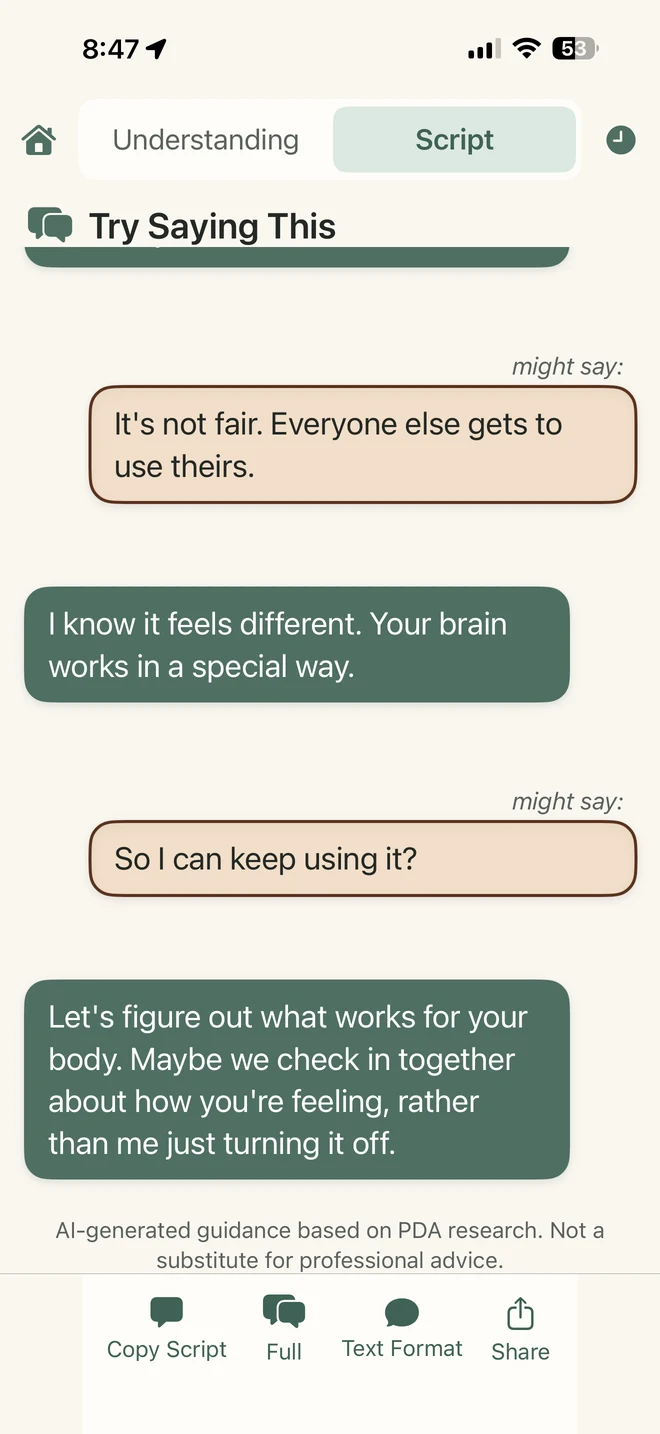
Script offers calm, low-demand words you can adapt to your relationship and situation. Use them aloud, send them to someone else, or borrow them for your own self-talk.
History helps you return to earlier responses. Settings can provide high-level context so guidance can better fit the moment; review every response for your situation.
Revisit previous questions, Understanding responses, and Script language.
Use supported settings to add helpful general context without including identifying details.
It does not diagnose, assess, provide medical or mental-health treatment, replace professional judgment, or respond as an emergency service. It does not guarantee an outcome. If someone may be in immediate danger, contact local emergency services or an appropriate crisis resource.