For professionals
Support Your PDA Clients More Effectively
Evidence-based, nervous-system-first guidance for therapists, educators, and specialists
Why Generic Training Isn't Enough
You've noticed it: the child who doesn't respond to traditional ABA. The student who escalates with reward charts. The client who seems manipulative but you suspect there's more going on.
PDA requires a completely different framework. One that most professional training doesn't cover.
The challenge:
- Standard autism interventions often worsen PDA presentations
- Behavioral approaches increase nervous system activation
- Demand-heavy environments trigger fight-or-flight responses
- Compliance-focused strategies damage trust and relationship
What works instead:
- Low-demand approaches that reduce threat perception
- Autonomy-supportive language and collaboration
- Nervous system regulation before skill-building
- Relationship and felt safety as the foundation
How PDA Question Helps Your Practice
For Therapists
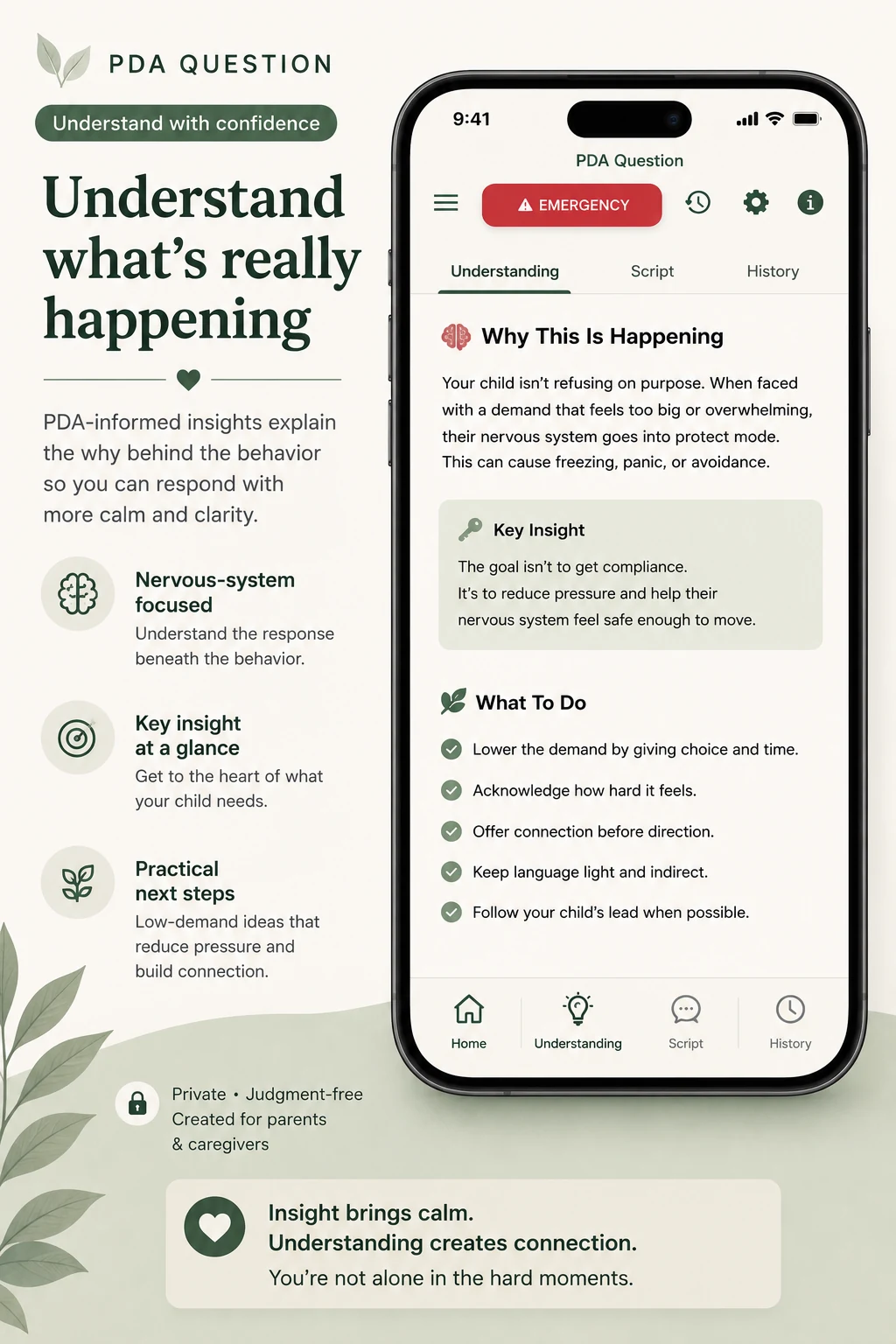
- Access PDA-specific intervention strategies during sessions
- Generate visual metaphors clients can understand
- Get language for explaining PDA to parents and schools
- Learn nervous-system-first approaches that actually work
For Educators
- Understand why traditional classroom management fails
- Get scripts for low-demand language in academic settings
- Access strategies for IEP meetings and accommodation planning
- Learn to differentiate PDA from oppositional behavior
For OTs, SLPs, and Specialists
- Adapt therapy approaches to honor autonomy needs
- Reduce demand load in skill-building activities
- Understand why "just try" triggers threat responses
- Build collaboration instead of compliance
Trained on Expert Content
PDA Question draws from:
- Hundreds of hours of specialized PDA parent coaching
- Leading professional texts on PDA assessment and intervention
- Brain-body regulation and polyvagal theory
- Lived experience from PDA families and self-advocates
Every response reflects current best practices in:
- Low-demand parenting and teaching
- Nervous system co-regulation
- Autonomy-supportive interaction
- Trauma-informed, relationship-first approaches
Professional Use Cases
Case 1: Session Planning
Quickly generate age-appropriate explanations of PDA concepts for your clients. Get scripts for introducing low-demand strategies to resistant parents.
Case 2: School Consultation
Access language for IEP meetings that helps teams understand why traditional supports aren't working. Get specific accommodation suggestions based on PDA needs.
Case 3: Parent Education
Generate visual metaphors and explanations you can share with parents. Help them understand their child's nervous system without shame or blame.
Case 4: Crisis Support
When a client is escalating, get immediate regulation strategies that honor their autonomy while supporting safety.
A Tool, Not a Replacement
PDA Question provides guidance based on established PDA frameworks and nervous-system science. It's designed to support - not replace - your clinical judgment and the therapeutic relationship.
Use it as:
- A consultation resource for PDA-specific situations
- A parent education and handout generator
- A quick reference for low-demand language
- A supplement to your existing expertise
Always apply recommendations within your scope of practice and adapt them to your specific client's needs.